PRODUCT
Self-aligning Ball Bearings
Bearing Overview
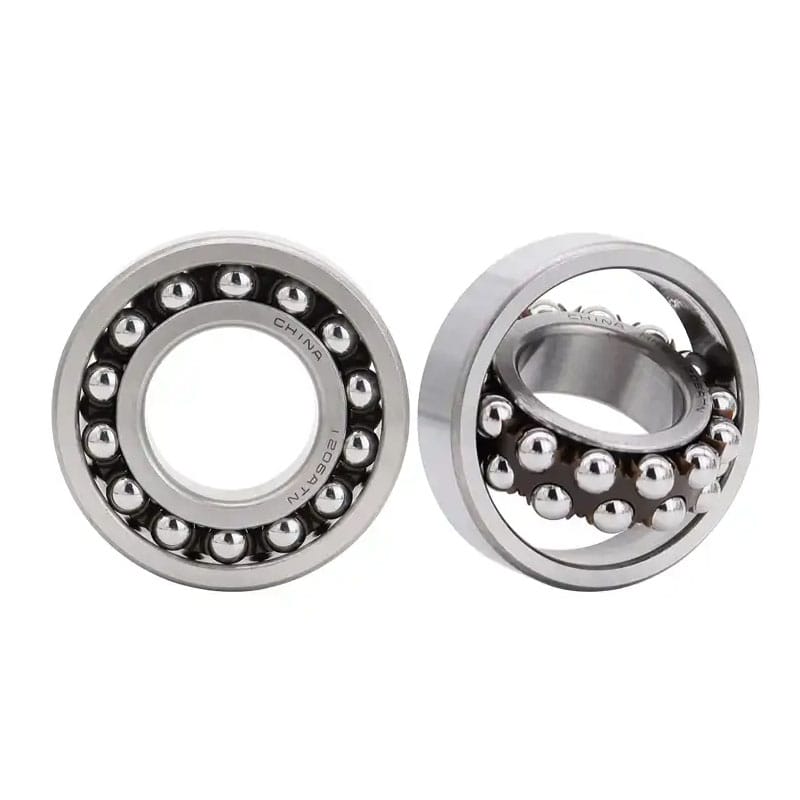
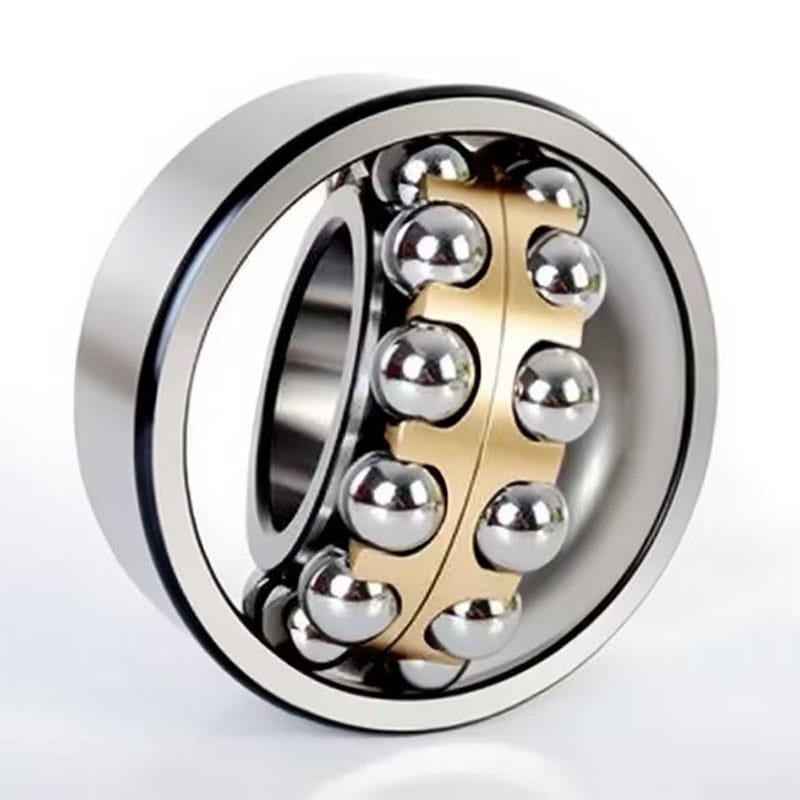
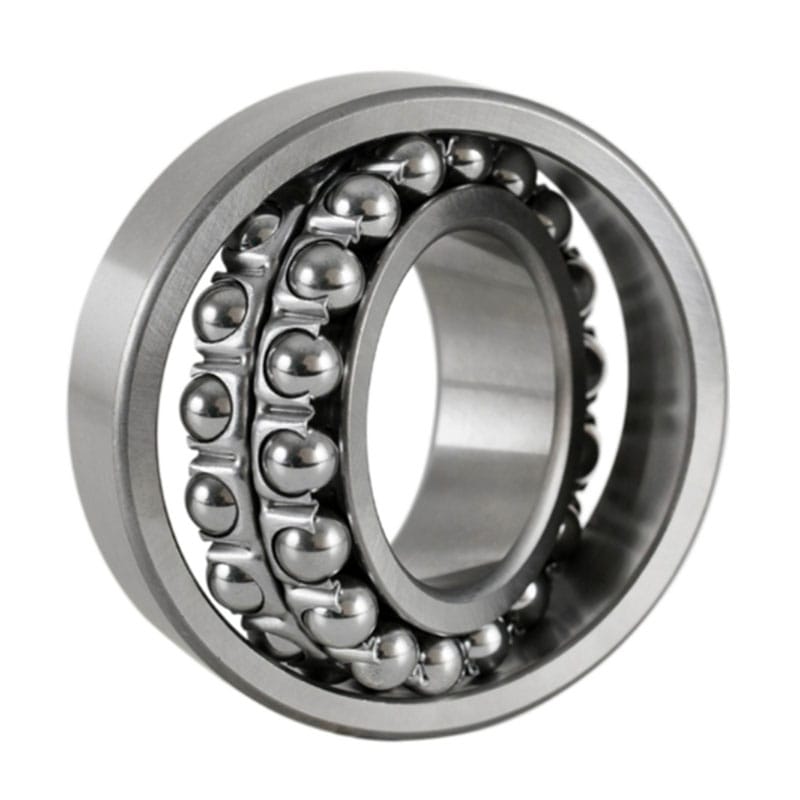
Self-aligning ball bearings are designed to compensate for shaft misalignment caused by installation errors, shaft deflection, or housing deformation. Their unique structure features two rows of balls running in a common spherical outer raceway, which allows the inner ring to automatically adjust its position relative to the outer ring, ensuring smooth operation even under misalignment conditions.
These bearings are particularly suitable for applications where alignment accuracy is difficult to maintain or where shafts are subject to bending under load. They offer low friction, stable running performance, and reduced maintenance requirements, making them a cost-effective solution for many light to medium-duty industrial systems.
Self-aligning ball bearings are widely used in agricultural machinery, textile equipment, conveyor systems, and general industrial machinery, where reliable performance and tolerance to misalignment are essential.
Key Features
- Self-aligning capability compensates for shaft misalignment
- Two-row ball design for improved load distribution
- Low friction and smooth operation
- Suitable for moderate radial loads
- Reduced sensitivity to installation errors
- Available in cylindrical and tapered bore options
- Long service life with low maintenance requirements
- Widely applicable in light and medium-duty machinery
Bearing Types
Self-aligning ball bearings are available in several standard series to meet different load and size requirements:
- 1200 Series (Light-duty self-aligning ball bearings)
- 1300 Series (Medium load capacity)
- 2200 Series (Enhanced load capacity, compact design)
- 2300 Series (Heavy-duty self-aligning ball bearings)
Bore Types
- Cylindrical bore: Standard fit design
- Tapered bore: 1200K / 1300K / 2200K / 2300K (for adapter sleeve mounting)
- UK Series: Adapter sleeve mounted self-aligning bearings
… Many other bearing models and series are not listed here. If you have any specific requirements or questions, feel free to contact us.
Applications
Self-aligning ball bearings are widely used in machinery systems where shaft misalignment is unavoidable or frequent.
- Agricultural machinery
- Textile machinery
- Conveyors and material handling systems
- Light industrial equipment
- Fans and blowers
- Packaging machinery
- Printing machinery
- Food processing equipment
- HVAC systems
- General mechanical equipment
Technical Specifications
| Item | Available Options |
| Structure | Self-Aligning Ball Bearing |
| Series | 1200 / 1300 / 2200 / 2300 |
| Bore Type | Cylindrical / Tapered |
| Mounting Type | Direct Fit / Adapter Sleeve (UK series) |
| Clearance | CN / C3 / C4 |
| Cage Material | Steel / Brass |
| Sealing | Open Type / Sealed Type (optional) |
| Lubrication | Grease or Oil |
| Material | High Carbon Chrome Bearing Steel |
Dimensions Table
Please refer to the table below for detailed dimensions and specifications of each series and model.
Many additional bearing models and customized solutions are available. If you have specific requirements, please feel free to contact us for technical support and selection guidance.
| Model NO. | Dimensions(mm) | Model NO. | Dimensions(mm) |
| 1200 | 10*30*9 | 1210 | 50*90*20 |
| 1201 | 12*32*10 | 1211 | 55*100*21 |
| 1202 | 15*35*11 | 1212 | 60*110*22 |
| 1203 | 17*40*12 | 1213 | 65*120*23 |
| 1204 | 20*47*14 | 1214 | 70*125*24 |
| 1205 | 25*52*15 | 1215 | 75*130*25 |
| 1206 | 30*62*16 | 1216 | 80*140*26 |
| 1207 | 35*72*17 | 1217 | 85*150*28 |
| 1208 | 40*80*18 | 1218 | 90*160*30 |
| 1209 | 45*85*19 | 1219 | 95*170*32 |
| 1220 | 100*180*34 | ||
| 1221 | 105*190*36 | ||
| 1222 | 110*200*38 | ||
| 1224 | 120*215*42 | ||
| 1226 | 130*230*46 | ||
| 1228 | 140*250*50 |
| Model NO. | Dimensions(mm) | Model NO. | Dimensions(mm) |
| 1300 | 10*35*11 | 1310 | 50*110*27 |
| 1301 | 12*37*12 | 1311 | 55*120*29 |
| 1302 | 15*42*13 | 1312 | 60*130*31 |
| 1303 | 17*47*14 | 1313 | 65*140*33 |
| 1304 | 20*52*15 | 1314 | 70*150*35 |
| 1305 | 25*62*17 | 1315 | 75*160*37 |
| 1306 | 30*72*19 | 1316 | 80*170*39 |
| 1307 | 35*80*21 | 1317 | 85*180*41 |
| 1308 | 40*90*23 | 1318 | 90*190*43 |
| 1309 | 45*100*25 | 1319 | 95*200*45 |
| 1320 | 100*215*47 | ||
| 1321 | 105*225*49 | ||
| 1322 | 110*240*50 |
| Model NO. | Dimensions(mm) | Model NO. | Dimensions(mm) |
| 2200 | 10*30*14 | 2210 | 50*90*23 |
| 2201 | 12*32*14 | 2211 | 55*100*25 |
| 2202 | 15*35*14 | 2212 | 60*110*28 |
| 2203 | 17*40*16 | 2213 | 65*120*31 |
| 2204 | 20*47*18 | 2214 | 70*125*31 |
| 2205 | 25*52*18 | 2215 | 75*130*31 |
| 2206 | 30*62*20 | 2216 | 80*140*33 |
| 2207 | 35*72*23 | 2217 | 85*150*36 |
| 2208 | 40*80*23 | 2218 | 90*160*40 |
| 2209 | 45*85*23 | 2219 | 95*170*43 |
| 2220 | 100*180*46 | ||
| 2221 | 105*190*50 | ||
| 2222 | 110*200*53 |
| Model NO. | Dimensions(mm) | Model NO. | Dimensions(mm) |
| 2300 | 10*35*17 | 2310 | 50*110*40 |
| 2301 | 12*37*17 | 2311 | 55*120*43 |
| 2302 | 15*42*17 | 2312 | 60*130*46 |
| 2303 | 17*47*19 | 2313 | 65*140*48 |
| 2304 | 20*52*21 | 2314 | 70*150*51 |
| 2305 | 25*62*24 | 2315 | 75*160*55 |
| 2306 | 30*72*27 | 2316 | 80*170*58 |
| 2307 | 35*80*31 | 2317 | 85*180*60 |
| 2308 | 40*90*33 | 2318 | 90*190*64 |
| 2309 | 45*100*36 | 2319 | 95*200*67 |
| 2320 | 100*215*73 | ||
| 2321 | 105*225*77 | ||
| 2322 | 110*240*80 |
Q & A
What are self-aligning ball bearings used for?
Self-aligning ball bearings are used to accommodate shaft misalignment in applications where perfect alignment cannot be guaranteed. They are commonly used in agricultural machinery, textile equipment, and conveyor systems.
How do self-aligning ball bearings work?
They use two rows of balls running in a spherical outer ring, which allows the inner ring to automatically adjust its position and compensate for misalignment during operation.
What is the difference between 1200, 1300, 2200, and 2300 series?
The main difference is load capacity and design strength. 1200 series is light-duty, 1300 is medium-duty, 2200 is compact with higher capacity, and 2300 is heavy-duty.
What is the advantage of tapered bore self-aligning bearings?
Tapered bore bearings allow easy mounting using adapter sleeves and provide better fit adjustment, making installation more flexible and secure.
Can self-aligning ball bearings handle heavy loads?
They are mainly designed for moderate radial loads. For heavy radial or combined loads, other bearing types such as spherical roller bearings may be more suitable.
Our Factory