ISO Bearing Precision Classes
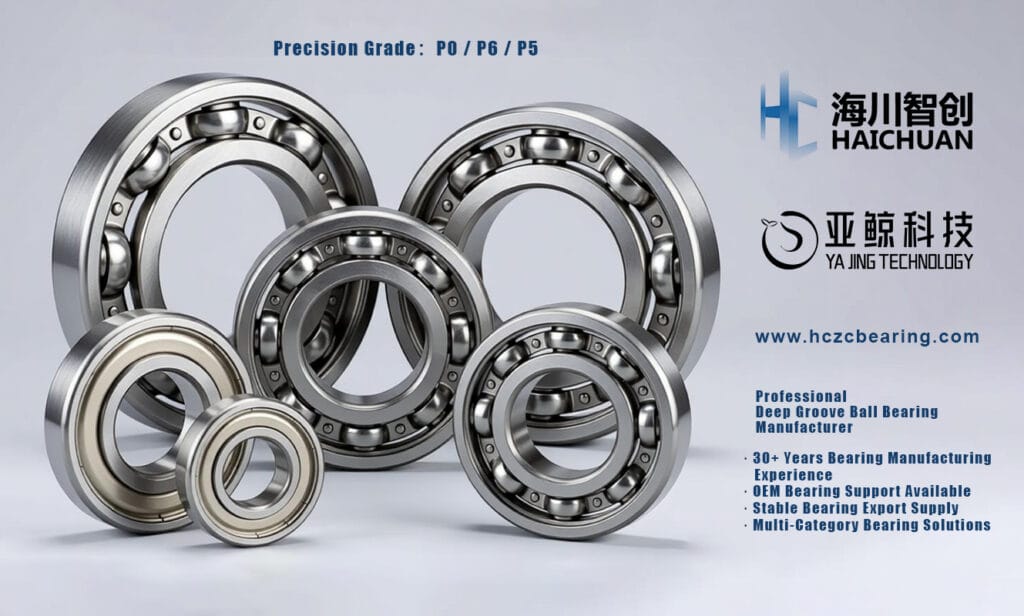
ISO defines five primary precision classes, each serving a distinct application tier:
P0 (Normal/PN): The baseline and most widely used grade worldwide. Adequate for general-purpose motors, agricultural machinery, conveyors, and pumps where moderate speed and standard accuracy suffice. Over 70% of bearings produced are P0.
P6: A step up in precision, reducing runout by roughly 30–50% versus P0. Common in industrial electric motors, gearboxes, and medium-to-high-speed equipment where lower vibration is expected.
P5: High-precision grade for applications demanding tight rotational accuracy. Used in machine tool spindles, precision instruments, and high-speed pumps where vibration control directly affects output quality.
P4: Ultra-precision territory. Found in CNC machining centers, precision grinders, and high-speed dental handpieces. Tolerances are measured in single-digit micrometers — for context, a human hair is about 70 μm thick.
P2: Among the highest precision grades commercially available. Reserved for aerospace gyroscopes, ultra-high-speed spindles, and specialized scientific instruments where no performance compromise is acceptable.