
· INDUSTRIES

industrial machinery
Understanding bearing applications starts with their role in industrial machinery, where they serve as the precision core ensuring efficient equipment operation. They support various rotating shafts and convert sliding friction into rolling friction, which significantly reduces energy consumption and wear. By ensuring extremely high rotational accuracy, bearings directly determine the processing quality, operational stability, and overall lifespan of equipment like machine tools.
The range of bearings involved is extensive and highly specialized. Machine tool spindles often use high-speed precision angular contact ball bearings to ensure machining accuracy. Heavy-duty rolling mills and crushers rely on robust spherical roller bearings. Various motors and pumps commonly use deep groove ball bearings. Meanwhile, automated conveyor lines and robotic arms cannot function without the precise guidance of linear bearings and crossed roller bearings.
automotive & transportation
In automotive and transportation, bearings act as the vital “joints” of vehicles. They support rotating parts like wheels, engines, and axles, significantly reducing friction and wear. This ensures smooth, safe motion, improves fuel efficiency, and enhances overall reliability across cars, trains, and logistics systems.
The range of bearings involved is extensive. Vehicle chassis and drivetrains widely use tapered roller bearings and hub bearing units that handle combined loads. Engines and accessories mostly adopt high-speed deep groove ball bearings. Transmissions commonly feature cylindrical roller bearings and needle roller bearings, while steering and suspension systems rely on thrust and spherical plain bearings.

agricultural & construction
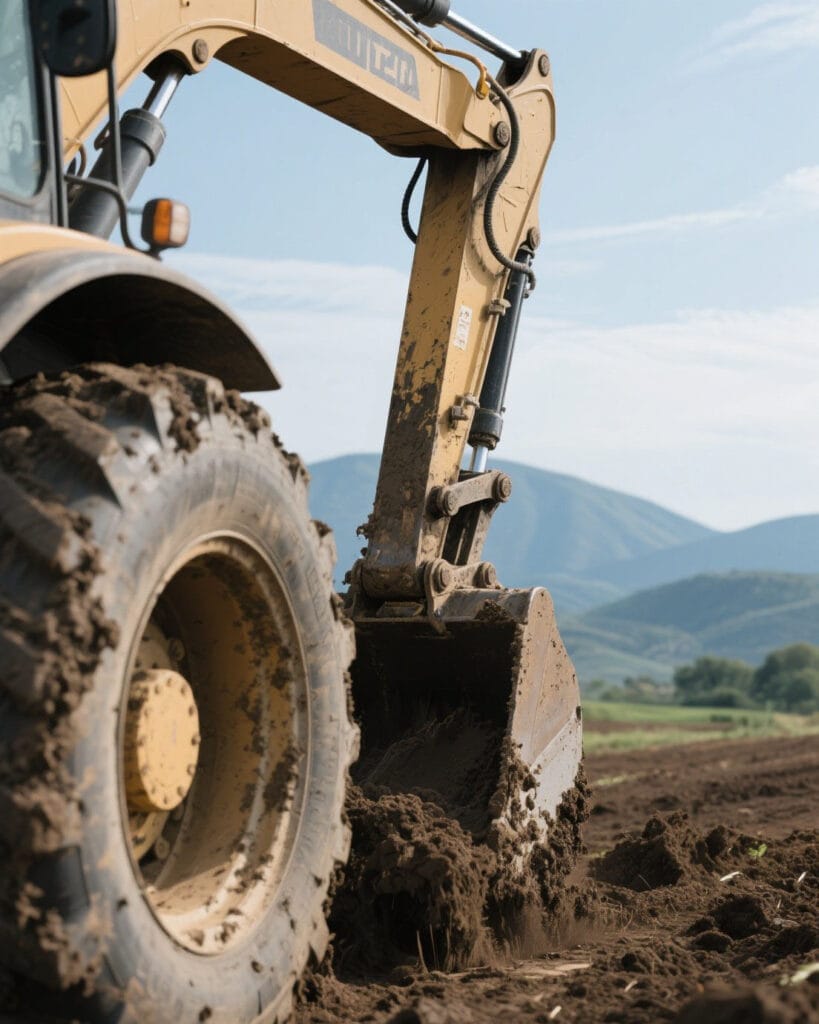
In agricultural and construction machinery, bearings are the robust foundation for surviving extreme conditions. They must withstand severe shock loads, heavy dust, and moisture. By reducing friction and ensuring continuous operation under heavy loads, bearings directly determine the equipment’s efficiency, reliability, and overall service life.
The bearing types involved prioritize durability and sealing. Mounted spherical bearings, which self-align and resist contamination, are widely used in harvesters and conveyors. Heavy-duty tapered roller bearings support tractor hubs and transmissions. Meanwhile, self-lubricating plain bearings are common in the pivot points of excavators and grain headers to minimize routine maintenance.
energy & power
In the energy and power sector, bearings support massive rotors, withstand extreme loads and harsh environments, and ensure long-term high-efficiency operation by reducing friction. Bearing reliability directly determines energy production continuity, safety, and overall system efficiency.
The bearing types involved vary by energy source. Wind turbines extensively use yaw, pitch, and main shaft bearings to capture wind energy. Hydro and thermal power generators rely on large cylindrical roller and thrust bearings to support heavy rotors. In harsh oil and gas extraction, high-pressure and corrosion-resistant specialty bearings ensure the stable operation of drilling equipment.