
· Industrial Equipment Bearings for Manufacturing, Automation & Material Handling
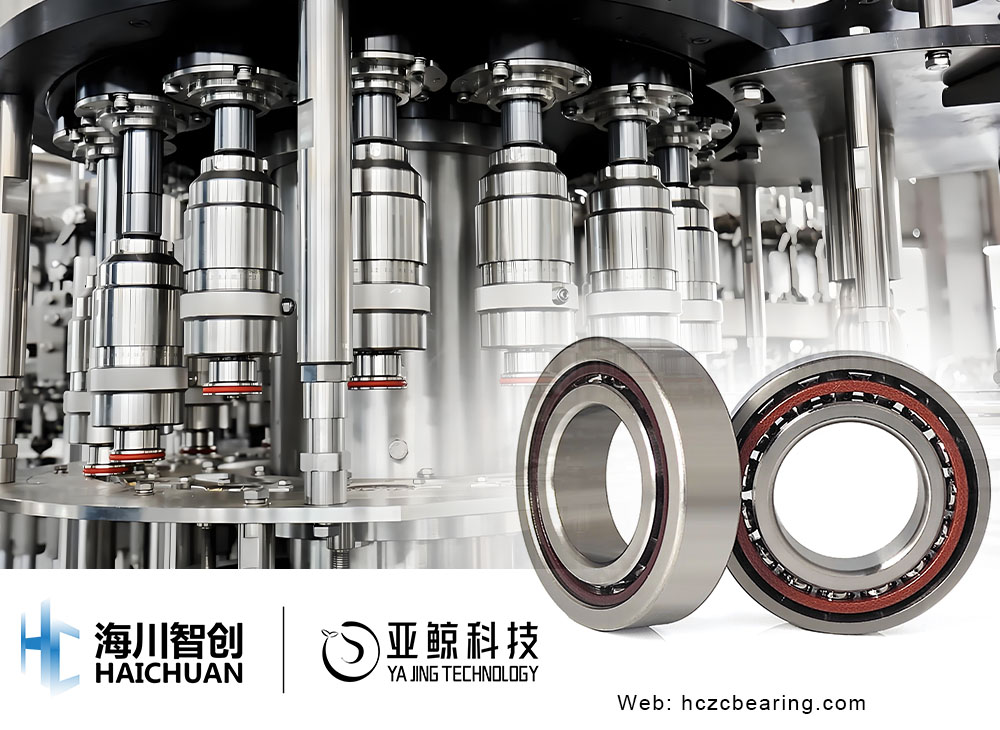
HAICHUAN provides reliable industrial equipment bearing solutions for manufacturing, automation, packaging, and material handling applications requiring precision, durability, and consistent performance.
Need help selecting the right bearing for your industrial equipment application?
Discuss Your Application
Provide your machine type, bearing specification, or operating conditions for technical evaluation.
Browse all HAICHUAN Solutions.
Industrial Equipment Environments Demand More from Every Bearing
Industrial equipment operates under a wide range of working conditions. From automated production lines to heavy processing machinery, bearing selection must consider load, speed, precision, contamination, and maintenance requirements to achieve stable performance and long service life.
1. Continuous Production Operation
Many industrial machines operate for extended hours with limited maintenance windows. Pumps, conveyors, production lines, and processing equipment generate millions of rotation cycles, making bearing fatigue life and lubrication stability critical factors for reliable operation.
2. Variable Loads and Operating Conditions
Industrial equipment rarely works under a single fixed condition. Machines may experience changing loads, frequent starts and stops, acceleration, vibration, or occasional shock forces. Bearings must be selected according to actual duty cycles rather than average operating conditions.
3. Precision and Low Vibration Requirements
Automation equipment, machine tools, and high-speed machinery require accurate positioning and smooth rotation. Excessive vibration, runout, or internal clearance variation can affect machining accuracy, product quality, and overall equipment performance.
4. High-Speed Rotation and Heat Generation
Motors, spindles, fans, and precision machinery operate at elevated speeds where friction and temperature control become important. Proper bearing precision, clearance, and lubrication selection help maintain stable operation and prevent premature degradation.
5. Dust, Moisture and Contamination Exposure
Factory environments may contain dust, coolant, oil mist, metal particles, or moisture. Contaminants entering the bearing raceway accelerate wear and lubricant failure, making sealing design and maintenance practices essential.
6. Maintenance Efficiency and Downtime Control
Unexpected bearing failures can interrupt production schedules and increase maintenance costs. Industrial users require reliable bearing solutions that simplify replacement, reduce service frequency, and improve overall equipment availability.
These demanding conditions require industrial bearings to be selected based on equipment structure, operating conditions, and maintenance requirements rather than simply matching a bearing number. The following sections explain suitable bearing solutions for different industrial equipment applications.
Industrial Equipment Bearing Selection Guide
Matching Bearing Solutions to Different Equipment Requirements
Selecting the right industrial equipment bearing requires more than matching a part number. Load direction, operating speed, precision requirements, contamination level, and maintenance conditions all influence bearing performance and service life.
HAICHUAN evaluates industrial bearing requirements based on equipment structure and operating conditions, providing suitable solutions for manufacturing machinery, automation systems, machine tools, packaging equipment, and material handling applications.
1. Manufacturing & Material Processing Equipment Bearings
Typical Applications: Presses, mixers, production lines, grinding machines, feeders, and other industrial processing equipment.
Operating Conditions: These machines often experience repeated loads, vibration, and continuous operation. Some applications also involve shock loads, dust, or material contamination.
Recommended:
Deep Groove Ball Bearings
Cylindrical Roller Bearings
Spherical Roller Bearings
Why it works: Ball bearings provide versatile support for general applications, while roller bearings deliver higher load capacity and improved reliability under demanding industrial conditions.
2. Automation Equipment
Bearings
Typical Applications: Robotic systems, linear actuators, assembly machines, pick-and-place equipment, and automated production systems.
Operating Conditions: Automation equipment requires smooth motion, low friction, high repeatability, and stable performance during frequent acceleration and positioning cycles.
Recommended:
Linear Motion Bearings
Deep Groove Ball Bearings
Angular Contact Ball Bearings
Why it works: Linear bearings ensure accurate guided movement, while rotary bearings provide smooth operation and reliable support for automation mechanisms.
3. Machine Tool Bearings
Typical Applications: CNC machines, spindle systems, ball screws, rotary tables, and precision machining equipment.
Operating Conditions: Machine tools require high accuracy, low vibration, and stable performance under combined radial and axial loading conditions.
Recommended:
Angular Contact Ball Bearings
Deep Groove Ball Bearings
Linear Motion Bearings
Why it works: Angular contact bearings support high-speed combined loads while maintaining rigidity and precision required for accurate machining operations.
4. Packaging Equipment Bearings
Typical Applications: Filling machines, labeling systems, sealing equipment, and high-speed packaging production lines.
Operating Conditions: Packaging equipment operates continuously and may face dust, moisture, cleaning processes, and frequent production cycles.
Recommended:
Sealed Deep Groove Ball Bearings
Pillow Blocks Bearings (Mounted)
Why it works: Sealed bearing designs protect against contamination while reducing maintenance requirements and improving reliability in high-throughput production environments.
5. Conveyor & Material Handling Equipment Bearings
Typical Applications: Belt conveyors, roller conveyors, transfer systems, feeders, and industrial material handling equipment.
Operating Conditions: Conveyor systems require reliable operation under continuous rotation, contamination exposure, shaft misalignment, and limited maintenance windows. Bearing replacement efficiency is also a key consideration because downtime directly affects production flow.
Recommended: Pillow Blocks Bearings (Mounted)
Including:
UCP Pillow Block Units
UCF Flange Units
UCFL Two-Bolt Flange Units
UC Insert Bearings
Why it works: Mounted bearing units combine easy installation, self-alignment capability, and reliable sealing performance. The spherical outer surface of UC inserts compensates for minor shaft misalignment, while the housing design allows quick replacement without complex machining.
For heavy-duty conveyors with higher shock loads or long spans, spherical roller bearings in plummer blocks may be considered. Cylindrical roller bearings are typically used in gearbox and drive systems where high radial capacity is required.
Different industrial applications require different bearing characteristics. Matching the bearing type to the machine design, operating conditions, and maintenance requirements helps improve reliability and reduce unexpected downtime.
| Equipment Application | Common Machines | Recommended Bearing Solution | Key Requirement |
|---|---|---|---|
| Manufacturing & Material Processing | Presses, mixers, grinders, feeders | Deep Groove Ball Bearings / Cylindrical Roller Bearings / Spherical Roller Bearings | Load capacity and reliable continuous operation |
| Automation Equipment | Robots, actuators, assembly systems | Linear Motion Bearings / Deep Groove Ball Bearings | Low friction and positioning accuracy |
| Machine Tools | CNC spindles, ball screws, rotary tables | Angular Contact Ball Bearings | Precision, rigidity, and high-speed performance |
| Packaging Equipment | Filling machines, labeling systems, packaging lines | Sealed Deep Groove Ball Bearings / Pillow Blocks Bearings (Mounted) | Contamination protection and maintenance reduction |
| Conveyor & Material Handling | Belt conveyors, roller conveyors, transfer systems | Pillow Blocks Bearings (Mounted) | Easy installation, alignment tolerance, and fast replacement |
Recommended Industrial Equipment Bearings for Every Application
Industrial equipment requires different bearing characteristics depending on load, speed, precision, and operating environment. The bearing families below cover the most common solutions used across manufacturing machinery, automation systems, processing equipment, and material handling applications.
Each bearing type is selected based on a specific engineering requirement, helping customers avoid both over-specification and premature failure caused by incorrect selection.
Deep Groove Ball Bearings
Why recommended: Deep groove ball bearings are the most widely used bearing type in industrial equipment due to their versatile design, low friction, and ability to support both radial and moderate axial loads. They provide reliable performance for general rotating applications where stable operation and cost efficiency are important.
• Design: Simple structure with low friction and high-speed capability
• Performance: Stable rotation with low noise and vibration options available
• Sealing: Open, ZZ shielded, and 2RS sealed designs for different environments
• Applications: Motors, packaging equipment, production lines, and general machinery
Linear Motion Bearings
Why recommended: Linear motion bearings provide accurate and low-friction guided movement for automation and precision equipment. They help maintain repeatable positioning and smooth operation in systems requiring controlled linear travel.
• Design: Linear bearings, shafts, and guide systems for precise movement
• Performance: Low friction with stable positioning accuracy
• Application: Automation equipment, assembly machines, CNC systems
• Support: Available for standard and customized linear motion requirements
Cylindrical Roller Bearings
Why recommended: Cylindrical roller bearings are designed for applications requiring higher radial load capacity and improved stiffness. Their line contact design allows them to handle heavier loads than standard ball bearings while maintaining reliable operation under demanding industrial conditions.
• Load Capacity: High radial load capability for heavy-duty applications
• Design: Roller-guided structure for improved rigidity and stability
• Clearance: C3 clearance options for thermal expansion and operating conditions
• Applications: Processing equipment, gearboxes, heavy machinery, and drive systems
Pillow Block Bearings
Why recommended: Mounted bearing units combine a bearing insert with a housing, providing simple installation, alignment tolerance, and easy replacement. They are widely used in conveyor and material handling systems where maintenance efficiency is critical.
• Design: UC insert bearing with UCP, UCF, and UCFL housing options
• Alignment: Spherical outside diameter compensates for minor shaft misalignment
• Sealing: Built-in seals protect against dust and contamination
• Applications: Conveyors, transfer systems, feeders, and material handling equipment
Angular Contact Ball Bearings
Why recommended: Angular contact ball bearings handle combined radial and axial loads in one direction, making them ideal for gearboxes, spindle assemblies, and precision machine tools. They support high-speed operation while maintaining accuracy under load.
• Load: Combined radial + axial (single direction); paired arrangements handle bidirectional thrust
• Speed: High limiting speeds suited to precision spindles and gearboxes
• Accuracy: P5/P4 grades available for machine-tool spindles
• Applications: Gearboxes, pumps, compressors, and CNC machine-tool spindles
Spherical Roller Bearings
Why recommended: Spherical roller bearings accommodate heavy radial loads and shaft misalignment, suited to demanding industrial drives and heavy equipment. Their self-aligning design tolerates deflection and housing-bore errors.
• Load: Very high radial capacity with moderate axial load
• Alignment: Self-aligning compensates for misalignment and shaft deflection
• Durability: Robust for continuous heavy-duty operation
• Applications: Heavy conveyors, crushers, large gearboxes, and process drives
Selecting the right industrial equipment bearing depends on machine design, operating conditions, and maintenance requirements. HAICHUAN can support customers with bearing recommendations based on drawings, samples, or application information.
Why Industrial Equipment Bearings Fail and How to Prevent It
Even the correct bearing type can fail prematurely when operating conditions are not properly controlled. In industrial equipment applications, most bearing failures are caused by lubrication problems, contamination, excessive loading, or installation issues rather than the bearing design itself.
Understanding these failure mechanisms helps customers select suitable bearings and establish proper maintenance practices for longer service life.
Lubrication Failure
Insufficient, excessive, or degraded lubrication increases friction and operating temperature inside the bearing. Over time, lubricant breakdown reduces the protective film between rolling elements and raceways, accelerating wear and fatigue damage.
Contamination Damage
Dust, metal particles, coolant, moisture, and other contaminants can enter the bearing and damage precision raceway surfaces. Even small particles can create abrasive wear, increase vibration, and shorten bearing service life.
Fatigue and Overload
Continuous loading, shock forces, or incorrect bearing selection can exceed the bearing’s fatigue capacity. Repeated stress causes raceway spalling, reducing performance and eventually leading to unexpected equipment downtime.
Misalignment and Improper Installation
Incorrect mounting, shaft deflection, or housing misalignment creates uneven load distribution inside the bearing. Proper installation methods and suitable bearing designs help prevent premature wear and maintain stable operation.
Correct bearing selection, proper lubrication, contamination protection, and accurate installation are essential for maximizing industrial equipment reliability and reducing unexpected maintenance costs.
Key Factors When Selecting Industrial Equipment Bearings
Selecting the right industrial equipment bearing requires evaluating the relationship between machine design, operating conditions, and maintenance requirements. Bearing type alone does not determine performance — load, speed, precision, clearance, and environmental conditions all influence service life and reliability.
By considering these factors together, customers can achieve more stable equipment operation and reduce unexpected bearing failures.
1. Load and Speed Requirements
Industrial equipment operates under different combinations of load and rotational speed. Heavy-duty machines require bearings with higher load capacity, while high-speed applications require designs with lower friction and suitable speed capability.
Bearing selection should consider actual operating conditions, including continuous load, acceleration, shock forces, and duty cycle.
2. Precision Requirements
Precision requirements vary significantly between general machinery and high-accuracy equipment. Automation systems, machine tools, and inspection equipment often require tighter tolerances and lower vibration levels.
Selecting suitable precision grades helps maintain positioning accuracy, reduce vibration, and improve overall equipment performance.
3. Internal Clearance Selection
Internal clearance directly affects bearing performance during operation. Incorrect clearance can lead to excessive vibration, overheating, or reduced load capacity.
Standard industrial applications may use normal clearance, while applications involving temperature rise, heavy loads, or vibration often require C3 clearance for better operating stability.
4. Sealing and Lubrication
Industrial environments may expose bearings to dust, moisture, coolant, oil mist, and other contaminants. Proper sealing and lubrication methods help protect internal components and extend bearing service life.
The correct combination of seal design, grease type, and maintenance interval depends on the operating environment and equipment requirements.
Industrial bearing selection is a balance between load capacity, operating speed, precision, clearance, and environmental protection. HAICHUAN supports customers in evaluating these factors based on equipment information, drawings, or operating conditions to recommend suitable bearing solutions.
Why Choose HAICHUAN for Industrial Equipment Bearing Supply
HAICHUAN is an integrated bearing manufacturer and supply partner with more than 30 years of bearing production experience in Linqing, Shandong — one of China’s major bearing manufacturing regions.
From standard industrial bearings to customized solutions, we support equipment manufacturers, distributors, and maintenance suppliers with reliable quality control, flexible supply options, and application-focused bearing recommendations.
1. Bearing Manufacturing Experience
With over 30 years of bearing manufacturing experience, HAICHUAN has developed strong capabilities in bearing ring processing, precision grinding, assembly, and quality control.
Our early manufacturing experience in bearing rings and raceway processing provides deeper control over critical components that influence bearing performance, noise, and service life.
2. Multi-category Bearing Supply
Industrial equipment often requires different bearing types across the same production system.
HAICHUAN supplies deep groove ball bearings, cylindrical roller bearings, mounted bearings, linear motion bearings, and other related bearing products through integrated supply resources.
This allows customers to simplify purchasing and maintain consistent quality across multiple equipment applications.
3. Flexible Supply for Industrial Applications
Different customers have different purchasing requirements, from prototype equipment to long-term production programs.
HAICHUAN supports flexible order quantities, mixed-model shipments, private label solutions, and customized packaging options to help distributors and equipment suppliers reduce inventory pressure.
4. Quality Control and Technical Support
Bearing performance depends on consistent manufacturing accuracy and inspection standards.
HAICHUAN controls key parameters including dimensions, hardness, clearance, noise, vibration, and surface quality. Technical support is available for bearing selection based on drawings, samples, or actual equipment operating conditions.
Request an Industrial Equipment Bearing Quote
Trusted by industrial customers and distributors across 30+ countries, HAICHUAN provides reliable bearing supply, strict quality control, and flexible solutions for manufacturing, automation, processing, and material handling applications.
Need help selecting the right bearing for your equipment?
Send us your bearing number, drawing, equipment model, or operating conditions. Our engineering team will evaluate the application requirements and recommend a suitable bearing solution based on load, speed, precision, and operating environment.
Ready to source reliable bearings for industrial equipment applications?
Request an Industrial Bearing Quote → | Talk to Our Bearing Engineers →
Dimensional inspection on every batch · Third-party inspection available · Mixed-model orders supported
Related Industries
Bearing duty varies by sector. Explore our solutions for other heavy industries:
• Electric Motor Bearings: Reliable Solutions for Pumps, Fans & Industrial Drives
• Agricultural Machinery Bearings: Reliable Solutions for Tractors, Harvesters & Farm Equipment
• Mining Equipment Bearings: Heavy-Duty Solutions for Crushers, Conveyors & Screens
See all industry bearing solutions.
Related Guides
• Bearing Selection Guide: step-by-step sizing method
• Bearing Materials Guide: steel grades and heat treatment
• Bearing Clearance Guide: C0 to C3 and when to use each
• Bearing Seals Guide: contact & labyrinth seal options for dusty duty
FAQ
Industrial equipment uses different bearing types depending on the machine design and operating conditions.
Deep groove ball bearings are widely used for general rotary applications, while cylindrical roller bearings are selected for higher radial loads. Mounted bearings are common in conveyor systems, linear motion bearings support precision movement in automation equipment, and angular contact bearings are used where combined loads and accuracy are required.
The best choice depends on load, speed, precision, and environmental conditions.
Industrial bearing selection should start with the application requirements rather than the bearing catalog.
Important factors include load direction, operating speed, precision requirements, shaft and housing design, contamination conditions, and maintenance expectations.
HAICHUAN can evaluate bearing selection based on equipment models, drawings, samples, or operating conditions.
Automation equipment commonly uses deep groove ball bearings, linear motion bearings, and precision bearings depending on the movement requirements.
Rotating components such as servo motors and rotary actuators typically use precision ball bearings, while linear guides and shafts use linear motion bearings for accurate positioning and smooth travel.
The correct selection depends on accuracy, speed, load, and duty cycle requirements.
Mounted bearings, including pillow block units with UC inserts, are commonly used in industrial conveyor systems.
Their self-aligning design helps compensate for shaft and frame misalignment, while the housing allows quick installation without a precision-machined bearing seat.
For heavier applications with higher shock loads, spherical roller bearings in plummer blocks may be considered.
The required precision grade depends on the equipment accuracy requirements.
General industrial machinery often uses standard precision grades, while automation equipment, machine tools, and high-speed applications may require higher precision such as P6 or P5.
Choosing the correct precision level avoids unnecessary cost while maintaining required performance.
Bearing clearance depends on load, temperature, speed, and mounting conditions.
Normal clearance is suitable for many standard applications, while C3 clearance is commonly selected for equipment involving higher temperatures, vibration, heavy loads, or tighter operating conditions.
The correct clearance helps prevent overheating, excessive vibration, and premature wear.
Yes. HAICHUAN supports customized bearing solutions based on customer drawings, samples, or technical requirements.
Customization options include special dimensions, internal clearance, sealing designs, precision requirements, packaging, and private label solutions for industrial equipment manufacturers and distributors.
Yes. HAICHUAN supports flexible ordering for industrial equipment applications, including mixed bearing models in one shipment.
There is no strict single-model MOQ requirement, and customers can start with smaller trial quantities before moving to larger production programs.
HAICHUAN controls key bearing quality parameters throughout production and before shipment.
Inspection items include dimensions, hardness, clearance, noise, vibration, and appearance quality.
Factory inspection reports can be provided, and third-party inspection services are also supported when required.
Yes. For legacy machines or equipment using discontinued bearing models, customers can provide bearing numbers, drawings, samples, or key dimensions.
HAICHUAN can evaluate the application requirements and recommend a suitable replacement solution to help keep existing equipment operating reliably.